
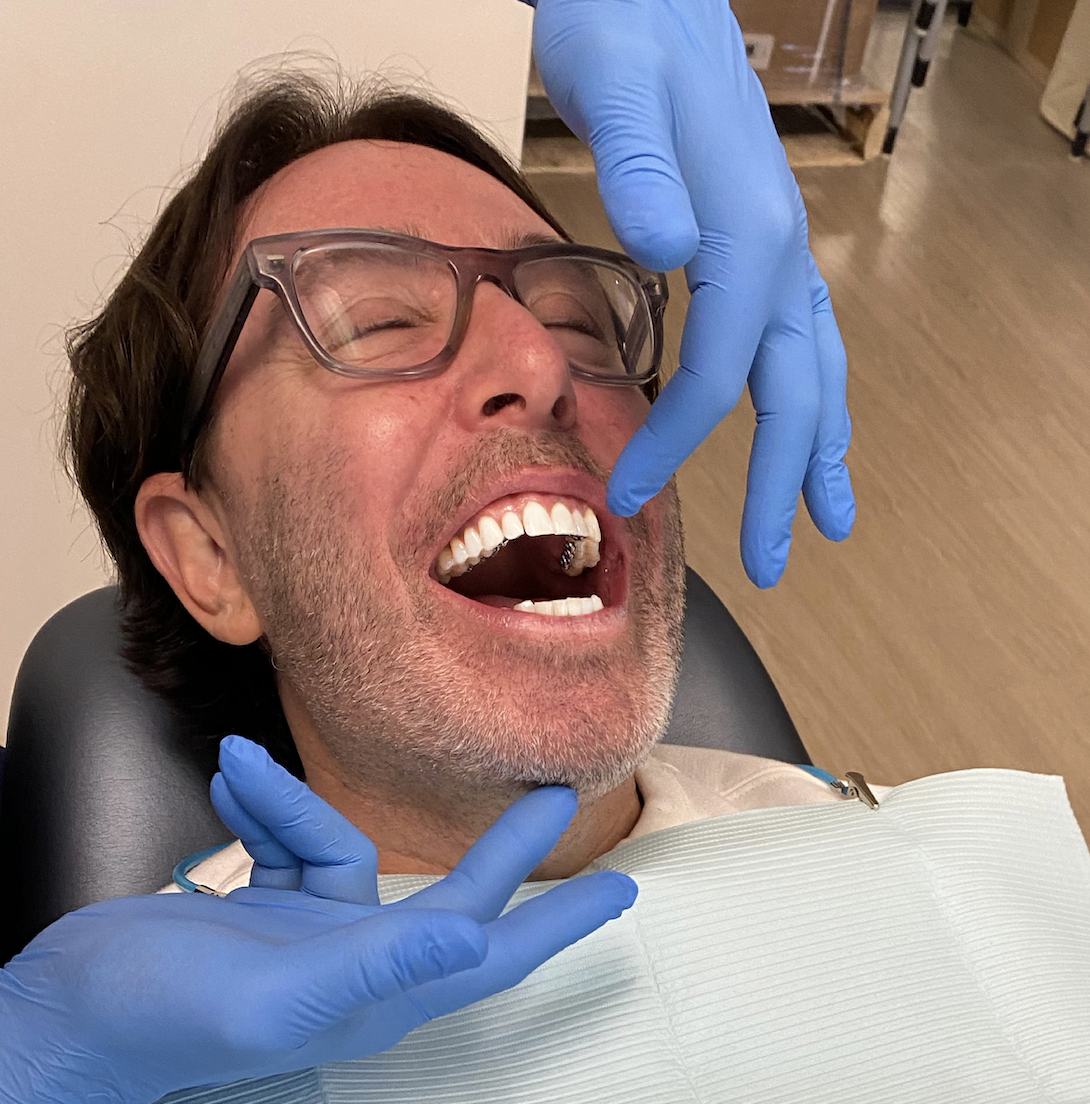
Whether you're just beginning to explore InSmile Braces or you've already scheduled your bonding appointment, it's natural to have questions about what to expect. This guide walks you through every stage of treatment with InSmile Braces, from your initial consultation to life after your braces are removed. Along the way, we'll explain how treatment works, what happens at your appointments, how to care for your braces, and what you can do to achieve the best possible result.
Your journey begins with a consultation with an InSmile orthodontist. During this appointment, your orthodontist will evaluate your teeth and bite, discuss your smile goals, determine whether InSmile Braces are the right treatment option, explain your treatment plan and estimated timeline, review costs, and answer any questions you may have.
If you decide to move forward, digital records are taken to begin designing your customized treatment.
Unlike traditional braces that rely primarily on stock orthodontic wires, InSmile treatment begins with a complete digital treatment plan. Your orthodontist will obtain digital scans, photographs, and any necessary X-rays. Using specialized software, your orthodontist designs your ideal smile by virtually moving your teeth into their planned positions. Once the treatment plan is finalized, your customized Smartwires and bonding trays are manufactured specifically for your teeth.
This process typically takes about four weeks before your bonding appointment.
Once your custom appliances are ready, you'll return to have your braces placed. Many orthodontists prefer bonding one arch at a time, usually the lower teeth first, followed by the upper teeth at a later appointment. This approach allows patients to gradually adapt to speaking, eating, and caring for their braces rather than adjusting to both arches simultaneously.
Your orthodontist will use a custom indirect bonding tray, allowing every bracket to be positioned precisely according to your digital treatment plan. Once the brackets are bonded, your first Smartwire is inserted and your treatment officially begins.
The first couple of weeks are typically the biggest adjustment period, though most patients adapt more quickly than they expect.
Discomfort: It's normal to experience mild soreness as your teeth begin moving, and your tongue may develop a few sore spots while adjusting to the brackets. To stay comfortable:
Most patients notice significant improvement within one to two weeks.
Speech: Because the braces are positioned behind the teeth, it's normal to notice temporary speech changes. Certain sounds, particularly "S" and "TH," may initially feel different. The good news is that most patients adapt quickly. Reading aloud for several minutes each day, especially passages with lots of S sounds such as the Rainbow Passage, can help accelerate adaptation. Most patients also notice their own speech changes far more than anyone around them does.
Excellent oral hygiene is one of the most important parts of successful orthodontic treatment.
Brushing: Brush after breakfast, after lunch, and before bed. When brushing, angle your toothbrush above the brackets, below the brackets, and toward the gumline. Spend at least two minutes brushing thoroughly each time.
Flossing: One advantage of the InSmile Smartwire design is that the loops between teeth allow patients to floss much like they would without braces. Floss once every day. Your orthodontist may also recommend a water flosser or proxy brushes to help remove food from around the brackets and wires.
Mouthwash: Once your mouth has adjusted and you're no longer using the mouth sore rinse, switch to an anticavity fluoride mouthwash twice daily to help reduce the risk of cavities throughout treatment.
Your braces are securely bonded to your teeth, but excessive force can still cause a bracket to come loose. To reduce the chance of breakage, avoid the following:
Hard Foods
Sticky Foods
Crunchy Foods
A few simple habits also help protect your braces: cut apples and carrots into smaller pieces, remove meat from the bone before eating, and avoid chewing on pens, pencils, fingernails, or other non-food objects. Limiting sugary drinks such as soda and sports drinks can also reduce the risk of cavities during treatment.
Most patients are seen approximately every 8 to 12 weeks, although the exact timing depends on your treatment plan and your orthodontist's preferences. Not every appointment is the same.
One of the unique aspects of InSmile Braces is that your Smartwires continue working between visits. Sometimes your orthodontist simply needs to monitor your progress and allow the current Smartwire to continue expressing its programmed movements. Other appointments may include changing to the next Smartwire, performing interproximal reduction (IPR) to create additional space, bonding buttons for elastic wear, beginning or adjusting elastics for bite correction, monitoring oral hygiene, or repairing a loose bracket if necessary. Every appointment is individualized based on how your teeth are responding.
Orthodontic treatment is both digital and biological. Although your treatment begins with a highly detailed digital plan, every patient responds differently. Some teeth move faster than expected while others move more slowly. For this reason, your orthodontist may obtain updated digital scans during treatment. If needed, a new digital treatment plan is created and additional customized Smartwires are fabricated. These refinement Smartwires help fine-tune your smile and improve the accuracy of your final result.
As your teeth approach their final positions, your orthodontist focuses on the small details that create an excellent finish. Some patients complete treatment using only Smartwires, while others may benefit from short-term use of active retainers or other finishing mechanics to make minor refinements before the braces are removed. Every smile is unique, and your orthodontist will determine the best finishing approach for your individual case.
The day your braces come off is one of the most exciting milestones of treatment. During your debond appointment, your brackets are carefully removed, any remaining adhesive is polished away, final photographs and scans may be taken, and your retainers are delivered. Your orthodontist will also review instructions for maintaining your new smile going forward.
Orthodontic treatment doesn't end when the braces come off. Teeth naturally have a tendency to shift throughout life, and retainers are what preserve the result you've worked hard to achieve. Your orthodontist will recommend a retainer schedule based on your individual needs. Full-time wear is typically recommended immediately after treatment, with long-term nighttime wear important for maintaining your smile over time.
Retention is a lifelong commitment. The best orthodontic treatment cannot permanently prevent teeth from naturally wanting to move, and wearing your retainers as instructed is the only way to keep your smile looking its best for years to come.
True orthodontic emergencies are uncommon, but you should contact your orthodontist if you experience a loose bracket, a wire causing persistent irritation, a broken appliance, significant discomfort that does not improve, or any questions about your treatment.
One unique characteristic of InSmile Smartwires is that they are temperature sensitive. You may notice the wire feels slightly more active after drinking hot beverages and a little more relaxed after cold drinks. This is completely normal and not a cause for concern.
Every patient adapts to orthodontic treatment a little differently, but most find that InSmile Braces quickly become part of everyday life. By keeping your appointments, maintaining excellent oral hygiene, protecting your braces, and following your orthodontist's recommendations, you'll give yourself the best opportunity for a result that lasts.