
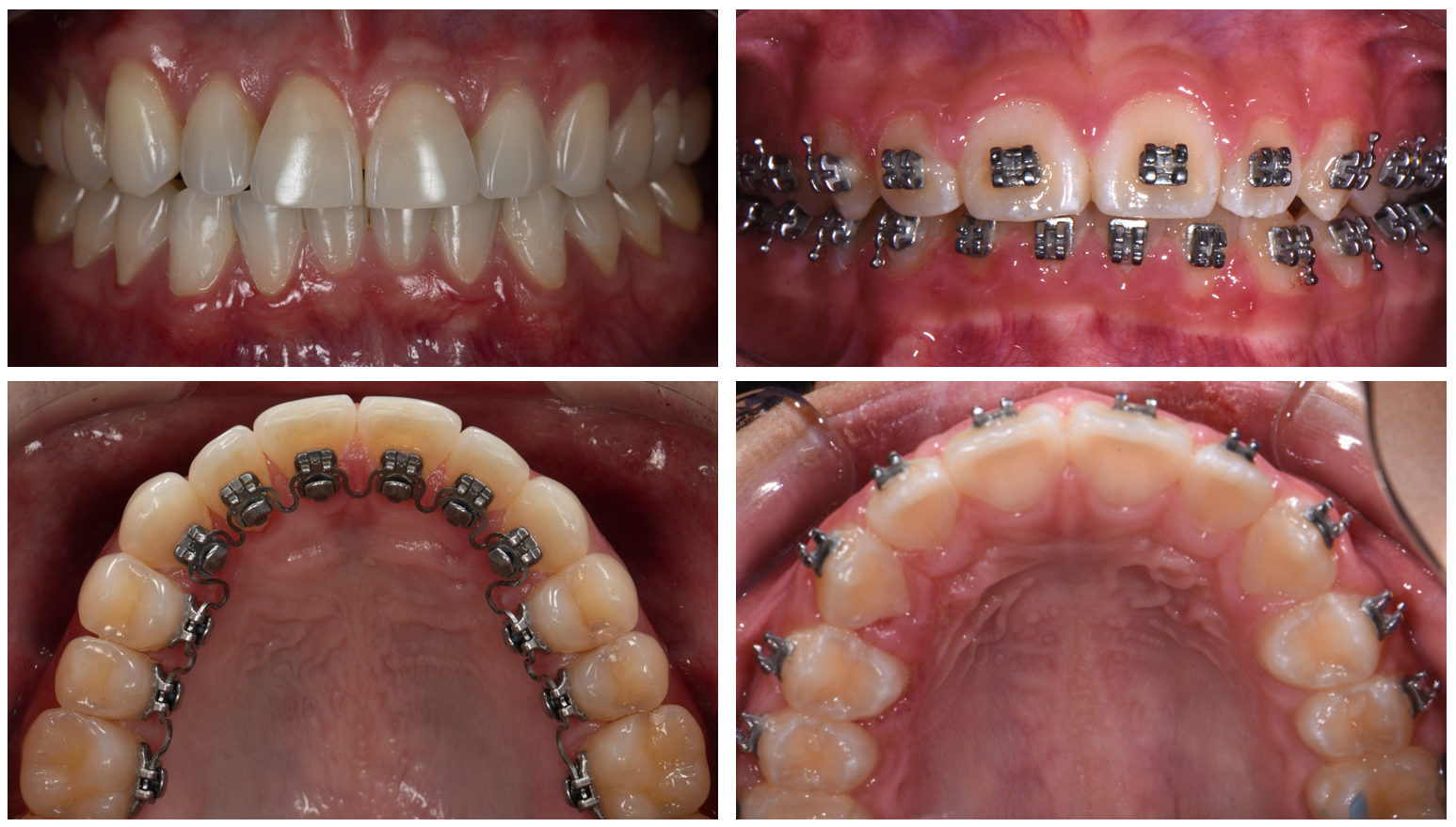
For decades, traditional braces have been the gold standard of orthodontic treatment. Today, patients have more choices than ever, including lingual braces like InSmile Braces, which are placed behind the teeth instead of on the front. Both systems are highly effective and capable of treating everything from simple crowding to complex bite problems. Understanding how they differ can help you make a more informed decision about which option fits your goals.
Before discussing the differences, it's worth recognizing that InSmile Braces and traditional braces have far more in common than many patients realize. Both are fixed orthodontic appliances that move teeth continuously, 24 hours a day, without relying on patient compliance. Both can treat mild to complex orthodontic problems, including crowding, spacing, and bite issues, and both can be used alongside elastics, interproximal reduction (IPR), or tooth extractions when the treatment plan requires it. In other words, both systems are capable of producing excellent orthodontic results. The decision often comes down to appearance, customization, comfort, and personal preference.
Traditional braces are attached to the front surfaces of the teeth. Although today's brackets are smaller and lower profile than they were years ago, they remain visible whenever you smile or speak. InSmile Braces are bonded to the back (tongue side) of the teeth, completely hidden behind your smile. Most people will not realize you're wearing braces unless you tell them, which for many adults and professionals is one of the most compelling reasons to choose lingual treatment.
Traditional braces come in two main varieties. Metal braces use stainless steel brackets and wires and are the most recognizable form of orthodontic treatment. Ceramic braces use tooth-colored or clear brackets that blend more naturally with the teeth, making them less noticeable than metal, but they are still attached to the front surfaces and remain visible up close. Ceramic brackets can also be prone to staining from coffee, tea, and certain foods over time, which is worth considering for patients who choose them primarily for aesthetics.
InSmile Braces are in a different category entirely. Because they are bonded to the tongue side of the teeth, there is nothing visible on the front surfaces at any point during treatment. For patients who want the most discreet fixed orthodontic option available, lingual braces offer an advantage that neither metal nor ceramic braces can match.
One of the most meaningful differences between InSmile Braces and traditional braces is the level of customization built into the treatment from the start. Traditional braces typically begin with standard nickel titanium (NiTi) archwires manufactured in stock arch forms. As treatment progresses, orthodontists often transition to stainless steel wires and manually place bends to refine tooth positions. This approach has been used successfully for decades and remains highly effective.
It is worth noting that some newer traditional brace systems, such as LightForce, now incorporate digital treatment planning and 3D-printed custom brackets placed on the front of the teeth. These systems represent an evolution in labial orthodontics and offer greater customization than conventional metal or ceramic braces. However, they are still placed on the visible front surfaces of the teeth, which means the aesthetic limitation of traditional braces remains regardless of the level of digital customization involved.
InSmile Braces combine digital customization with lingual placement. Treatment begins with a digital scan, and your orthodontist designs your ideal smile using specialized software before treatment even begins. Customized Smartwires are then manufactured specifically for your digital treatment plan, meaning each wire is designed for your individual smile rather than starting from a stock arch form.
Both traditional braces and InSmile Braces are capable of performing nearly every orthodontic tooth movement, including treating crowding, spacing, rotated teeth, deep bites, open bites, crossbites, overbites, and underbites. Because both systems are fixed appliances, they offer excellent control over tooth movement throughout treatment.
One advantage of InSmile Braces is that the customized Smartwires can begin performing multiple types of tooth movement simultaneously from the start of treatment, based on the digital plan. Traditional braces often introduce additional mechanics such as power chains, springs, or manual wire adjustments progressively as treatment advances. Both approaches are effective and have produced outstanding results for many patients over many years.
Both types of braces involve an adjustment period. With traditional braces, patients often notice irritation on the inside of their lips and cheeks during the first week or two as the soft tissue adapts to the brackets. With InSmile Braces, the brackets sit next to the tongue instead, and because the tongue is particularly sensitive, patients commonly experience temporary tongue irritation and mild speech changes while adapting. Both types of discomfort improve quickly as the mouth adjusts, and most patients find the adjustment period shorter than they anticipated.
Speech is one area where traditional braces have a practical advantage. Because they are attached to the front of the teeth, they generally have little effect on speech. With InSmile Braces, temporary speech changes are common during the first couple of weeks while the tongue learns to work around the brackets, particularly with "S" and "TH" sounds. Most patients adapt quickly, and many find that other people notice the change far less than they do themselves. Reading aloud daily during the adjustment period helps accelerate adaptation considerably.
Both systems require excellent brushing and flossing habits throughout treatment. Traditional braces require patients to thread floss under the wire using floss threaders, orthodontic flossers, or water flossers, which adds time to the daily routine. One practical advantage of the InSmile Smartwire design is the interproximal loops between each tooth, which allow patients to floss much more like they normally would without braces. For patients who place a high value on maintaining their usual oral hygiene routine, this is a meaningful distinction.
Both traditional braces and InSmile Braces require regular adjustment appointments, typically every 8 to 12 weeks. With traditional braces, appointments often involve changing wires, adding power chains, adjusting elastics, or making manual wire modifications. With InSmile Braces, appointments may include progress evaluations, Smartwire changes, IPR, elastic adjustments, or digital rescans for refinements when needed. Not every InSmile appointment requires a new Smartwire. Sometimes the most appropriate step is allowing the current wire to continue expressing the movements it was designed to perform, which can mean shorter and less frequent visits compared to traditional brace adjustments.
Traditional braces are generally the most affordable comprehensive orthodontic treatment option available. Because InSmile Braces involve customized digital treatment planning, individualized Smartwires, and specialized laboratory manufacturing, they typically carry a higher treatment cost. Many patients feel the additional investment is worthwhile given the aesthetic advantages and the precision of customized treatment. Your orthodontist can discuss the costs involved and help determine which treatment best fits your goals and budget.
Both traditional braces and InSmile Braces are capable of producing exceptional results, and the right choice depends on your priorities. If your primary concern is achieving excellent orthodontic results at the most accessible price point, traditional braces remain a proven and effective option. If you want comprehensive orthodontic treatment with the added benefits of completely hidden braces, digital treatment planning, and customized Smartwires, InSmile Braces may be the stronger fit.
An experienced InSmile provider can walk you through both options, compare them in the context of your specific case, and recommend the treatment that best matches your smile goals, lifestyle, and expectations.