
One of the first questions patients ask after getting InSmile Braces is: what can I eat?
The good news is that you can still enjoy most of the foods you love during treatment. Because your brackets and Smartwires are attached behind your teeth, making a few adjustments to how and what you eat can help keep your braces comfortable, prevent broken brackets, and keep your treatment on track.
When your InSmile Braces are first placed, your teeth may feel sore as they begin to move, and your tongue may need some time to adjust to the brackets behind your teeth. During this initial adjustment period, softer foods are usually the most comfortable choice. Our Home Care Instructions that you receive when you begin treatment with InSmile Braces recommend foods such as soups, yogurt, pasta, and smoothies until you feel ready to return to a more normal diet.
Other easy options during the first few days include scrambled eggs, oatmeal, mashed potatoes, soft rice, soft-cooked vegetables, macaroni and cheese, soft fish, bananas and other soft fruits, applesauce, cottage cheese, and soft sandwiches cut into smaller pieces.
You don't need to stay on a soft-food diet throughout treatment. As your teeth and tongue adjust, you'll gradually be able to return to most of your normal foods.
InSmile Braces are bonded to the inside surfaces of your teeth using specially formulated dental adhesive. Although the brackets are designed to remain securely attached throughout treatment, hard, sticky, or crunchy foods can place excessive force on a bracket and cause it to come loose. A detached bracket may stop working as intended and could slow your overall treatment progress. The goal isn't to make eating difficult. It's simply to protect your braces while they're doing their job.
Avoid biting directly into very hard foods, including:
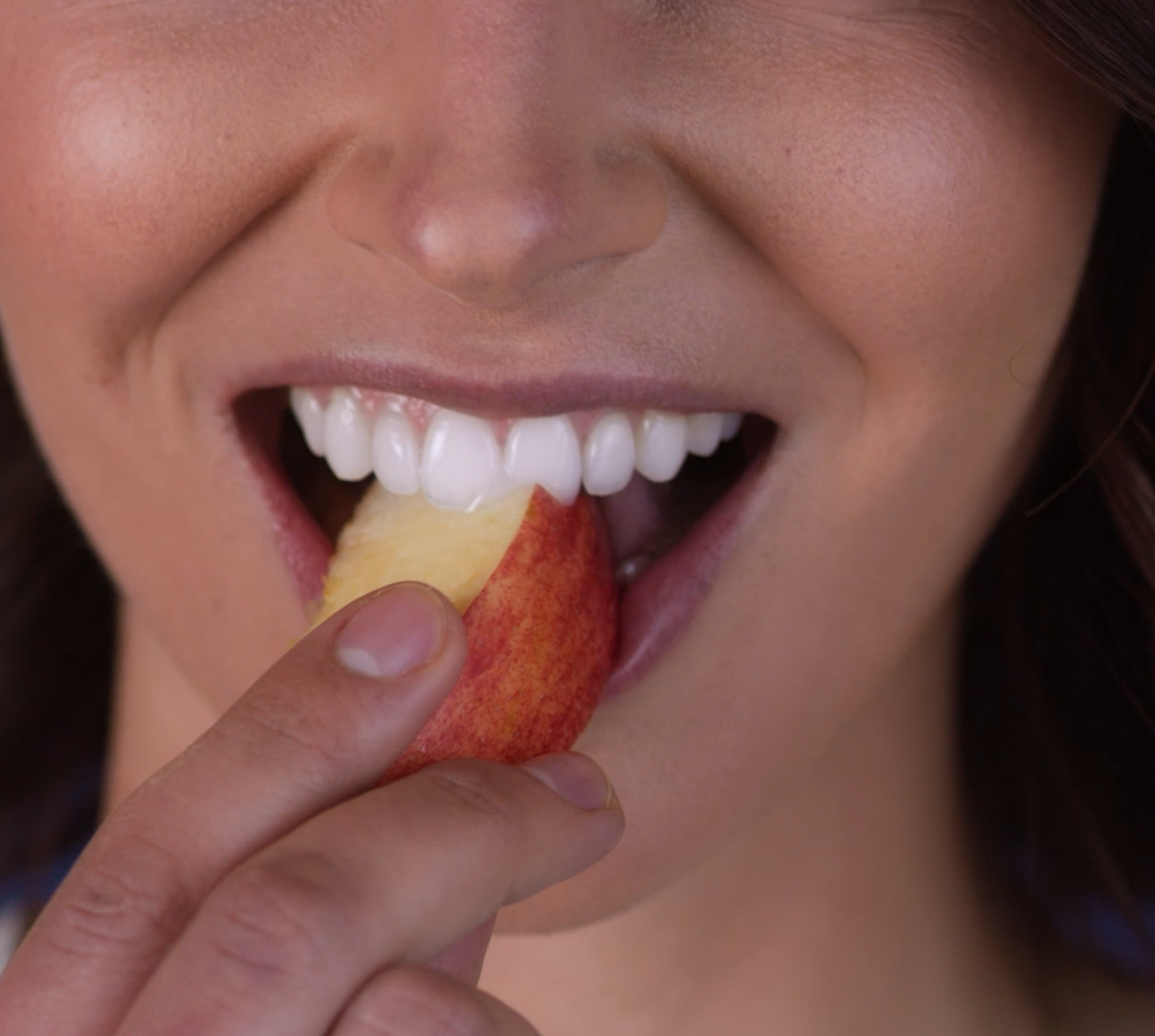
Hard foods can put enough force on a bracket to loosen it from the tooth. That doesn't mean you have to give up healthy foods like apples and carrots entirely, as cutting them into small, bite-sized pieces rather than biting directly into them is usually fine.
Avoid foods that can stick to or pull on your brackets and wires, including:
Sticky foods can wrap around your appliance and place unnecessary force on your brackets.
Be careful with especially hard or crunchy foods, including:
These foods can place sudden pressure on your brackets when you bite down.
One of the easiest ways to protect your InSmile Braces is to change how you eat certain foods rather than eliminating them completely. Instead of biting directly into an apple or raw carrot, cut it into small pieces first. Rather than biting meat directly off a bone, remove the meat before eating, which is particularly important with foods such as chicken wings and ribs. Smaller bites and softer pieces are generally easier on your braces and just as enjoyable.
You can still eat pizza with InSmile Braces. The softer portion of the crust is generally fine, but be careful with particularly hard or crunchy edges. Cutting pizza into smaller pieces rather than tearing into it can also reduce stress on your brackets.
Popcorn can be problematic because of the hard, unpopped kernels that sometimes hide at the bottom of the bag or inside individual pieces. Biting unexpectedly into a hard kernel can damage a bracket, so popcorn is included among the foods patients are instructed to avoid during treatment.
Gum is not recommended during InSmile treatment. It can stick to your brackets and Smartwires and is specifically included among the sticky foods to avoid.
Unlike clear aligners, InSmile Braces don't need to be removed when you eat or drink, so there are no restrictions on when you have your morning coffee. Water is always a great choice and helps reduce mouth dryness and sore spots during the adjustment period.
One thing worth knowing: InSmile Smartwires are temperature sensitive. You may notice that the wire feels slightly more active after hot beverages and a little more relaxed after cold drinks. This is completely normal and not a cause for concern. It's simply how the shape memory material in the wire responds to temperature changes.
For all beverages, keep in mind that drinks containing sugar or acid can increase your risk of tooth decay when consumed frequently. Rinsing with water after sugary or acidic drinks and maintaining good oral hygiene throughout treatment is important.
Brackets can also be damaged by habits that have nothing to do with eating. Avoid chewing on pens, pencils, fingernails, or other hard non-food objects, as these can place the same types of forces on your brackets as hard foods.
Because InSmile Braces are positioned behind your teeth, food can occasionally become trapped around the brackets or Smartwire. Our Home Care Instructions recommend brushing three times daily: in the morning, after lunch, and before bedtime. Angle your toothbrush above the brackets, below the brackets, and toward the gumline. Flossing once daily is also recommended, and a water flosser or interdental brush can be helpful for removing food trapped around the appliance. Keeping a small toothbrush or interdental brush with you makes cleaning after meals much easier when you're away from home.
If you notice that a bracket has come loose or a wire is sticking out and causing irritation, contact your orthodontist as soon as possible. Orthodontic wax can be placed over an irritating area temporarily until your orthodontist can evaluate and repair it. Don't wait until your next scheduled appointment to mention a loose bracket, as a bracket that is no longer properly attached may not move your tooth as planned.
Eating with lingual braces can feel different at first, and that's completely expected. During the first few days, choose softer foods and give your teeth and tongue time to adjust. As you become accustomed to your InSmile Braces, eating will start to feel much more natural, and most patients find it quickly becomes part of their normal routine.
The most important habits are straightforward: avoid very hard, sticky, and crunchy foods; cut harder foods into smaller pieces; don't bite meat directly from bones; and never chew on non-food objects. A little extra care goes a long way toward keeping your treatment progressing as planned.
Your orthodontist and their team are your best resource throughout treatment. Follow any specific dietary or home care instructions provided by your treating provider, as recommendations may vary based on your individual case.
Have questions about life with InSmile Braces? Find your InSmile Orthodontist or reach out to your provider's office directly.